
Best Power Banks in South Africa: The Ultimate Buying Guide
Load shedding, long commutes, and packed travel days have made the power bank one of the most-owned tech accessories in South Africa. But not every power bank is built for South African conditions, some can’t push enough power to keep a router alive during an outage, others are too heavy to carry daily, and cheap unbranded units can even be a fire risk. Continue to read more about Best Power Banks in South Africa.
This guide breaks down exactly what to look for, which capacities and brands make sense for different needs, and how to avoid the most common buying mistakes, so you can pick a power bank once and rely on it for years.
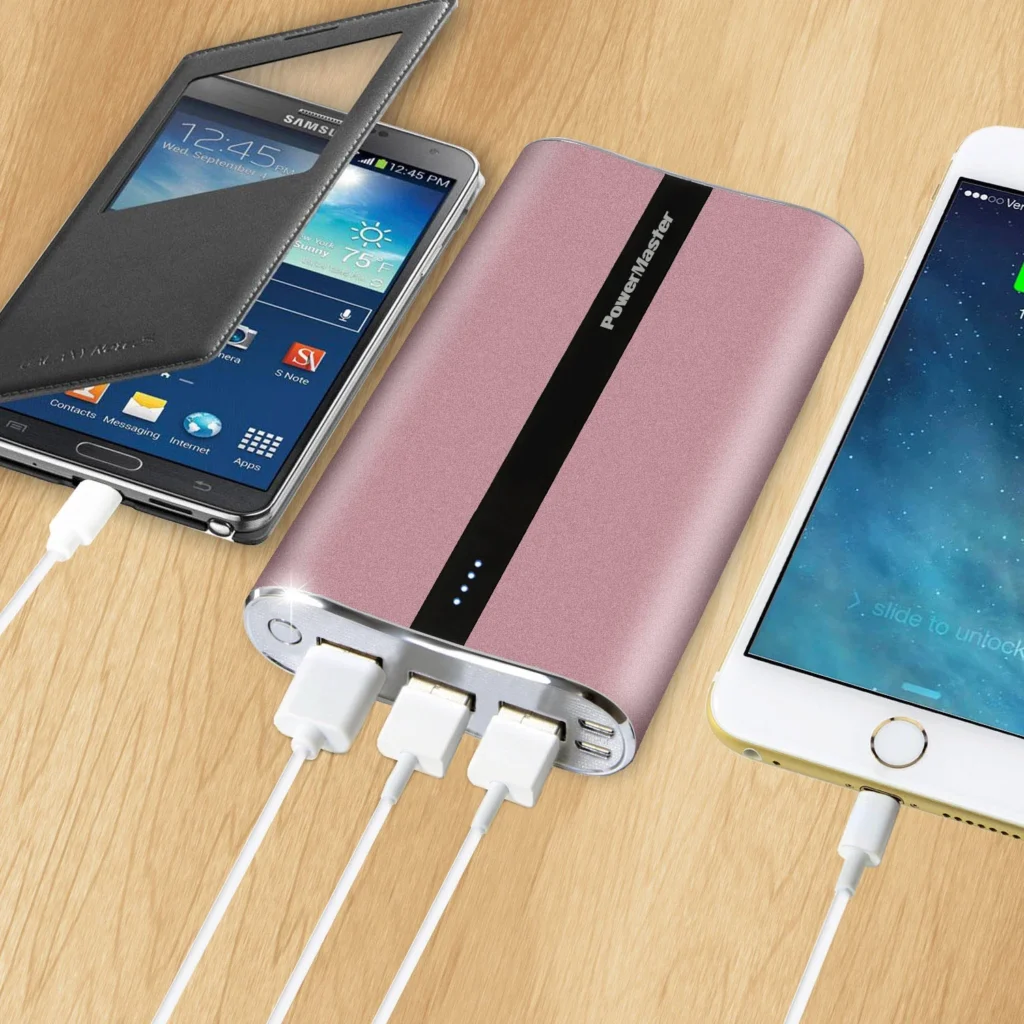
Quick Answer: What to Buy Based on Your Need
| Your priority | Look for | Typical capacity |
|---|---|---|
| Everyday phone top-ups | Compact, 18–20W fast charging | 5,000–10,000mAh |
| Load shedding backup for phone + router | High output, DC/pass-through, multiple ports | 20,000–30,000mAh |
| Laptop or MacBook charging | 65W+ USB-C Power Delivery (PD) | 20,000–27,000mAh |
| Weekend trips and hiking | Rugged build, solar top-up option | 10,000–20,000mAh |
| Flying with it | Under 100Wh (≈27,000mAh at 3.7V) | Check Wh, not just mAh |
Why Power Banks Matter More in South Africa Than Almost Anywhere Else
South Africa’s ongoing energy crisis, commonly known as load shedding, is a period of widespread national power outages that has continued since the end of 2007, driven largely by insufficient generation capacity at Eskom. For most households, that means scheduled blackouts of several hours, sometimes more than once a day. A power bank that can only manage a phone or two is no longer enough for many people who also need to keep a Wi-Fi router, ONT, or security camera running through an outage.
This is why the South African market has shifted from small novelty chargers toward higher-capacity units with router-compatible DC output, alongside more familiar phone-charging models for travel and daily use.
How to Choose a Power Bank: 6 Things That Actually Matter
1. Capacity: mAh vs. Wh
mAh (milliamp-hours) is the number printed on the box, but it isn’t the full story. Airlines and safety regulations use Wh (watt-hours), which factors in voltage. The rough conversion is:
mAh × Voltage (usually 3.7V) ÷ 1000 = Wh
So a 20,000mAh power bank is roughly 74Wh. A 10,000mAh power bank will typically deliver 2–3 full smartphone charges, accounting for energy lost in conversion, you never get 100% of the rated capacity out in real-world use.
2. Output power and charging protocol
Look at the wattage (W), not just the presence of USB-C. A basic 10W–12W bank is fine for a phone overnight. If you want to fast-charge a modern smartphone in under an hour, look for at least 18W–25W with PD (Power Delivery) or PPS support. Charging a laptop needs 45W–100W USB-C PD.
3. Number and type of ports
For a household backup unit, multiple simultaneous outputs matter more than raw speed, you’ll likely be charging a phone, a router, and a camera at once. Check for at least one USB-C and one USB-A output.
4. Pass-through charging
Pass-through lets you charge the power bank and power a device from it at the same time, useful for keeping a router alive continuously through load shedding rather than in bursts.
5. Safety certifications and battery cells
Reputable brands use protected lithium-ion or lithium-polymer cells with over-charge, over-discharge, short-circuit, and temperature protection. Unbranded “no-name” power banks sold cheaply online are a common cause of battery swelling and, in rare cases, fires, it’s worth paying slightly more for a known brand with local warranty support.
6. Weight and size for your use case
A 30,000mAh unit is genuinely heavy (600g+) and awkward for a handbag or gym bag. If you mainly need top-ups on the move, a 10,000mAh slim bank is more practical; save the high-capacity units for the desk, home office, or car.
Flying With a Power Bank in South Africa
Airlines follow international lithium-battery safety rules. As a general guide, most airlines allow power banks under 100Wh in carry-on luggage, and power banks are not permitted in checked luggage at all. Always confirm the exact limit with your specific airline before flying, as some carriers set stricter thresholds or require prior approval for larger batteries.
Best Power Banks in South Africa by Category
Best overall / most trusted brand: Anker
Anker remains the most widely stocked and reviewed power bank brand in South African retail, from Takealot to Incredible Connection. The Anker PowerCore 26800 is built around dual Micro-USB inputs for faster recharging, along with Anker’s PowerIQ and VoltageBoost technology for optimised charging speed across devices. At the higher end, models like the Anker 737 PowerCore 24K step up to USB-C PD output suited to laptops as well as phones, with 140W Power Delivery 3.1, a 24,000mAh capacity offering roughly five full charges for a phone like the iPhone 13, and a built-in digital display for real-time charge monitoring. Anker backs its power banks with an extended warranty, which matters given how often these units get daily use.
Good for: buyers who want a well-known brand, wide retail availability, and strong local warranty support.
Best for load shedding: high-capacity multi-device banks
A standard 10,000mAh power bank only provides around 2–3 phone charges, which isn’t enough for a full multi-hour outage, and most regular power banks also can’t run a Wi-Fi router or ADSL modem, since routers need a stable DC output that basic power banks don’t provide. If keeping your internet connection alive during outages is the priority, look specifically for power banks marketed with router or “load shedding” compatibility, rated 20,000mAh and above, with a dedicated DC output, rather than a generic USB phone charger.
Good for: home offices and households that need connectivity, not just a charged phone, through outages.
Best budget option
Entry-level 10,000mAh banks from brands like Volkano and other locally distributed lines are widely available at major retailers and electronics stores for cover under everyday use, commuting, load shedding top-ups, and backup for a night out. Ranges like this typically span 5,000mAh, 10,000mAh, and 20,000mAh options, support both Micro-USB and USB-C input, and some include a digital battery percentage display for at-a-glance charge status.
Good for: first-time buyers or a reliable spare to keep in a bag or car cubbyhole.
Best for travel and compact daily carry
For minimising bulk, prioritise slim 10,000mAh models with a built-in cable, these avoid the classic problem of a fully-charged power bank being useless because you forgot the cable. Multi-port travel adapters that combine plug adapters with USB and USB-C fast-charging outputs are also worth considering as a companion purchase if you travel internationally, since South African plugs differ from most of the world.
Good for: frequent flyers, hikers, and anyone who prioritises pocket-friendly size over raw capacity.
Where to Buy Power Banks in South Africa
The most reliable options for stock availability, genuine warranty support, and buyer protection are established local retailers:
- Takealot: the widest selection across brands and price points, with buyer reviews per listing
- Incredible Connection / Digicape: strong for Anker and other premium brands with in-store support
- Makro and Builders: good for budget and mid-range everyday options
- Evetech, Wootware, and specialist electronics retailers: useful for load-shedding-focused and higher-capacity units
Avoid buying unbranded power banks from informal online marketplaces with no listed safety certification — the small price saving isn’t worth the fire and battery-swelling risk.
Frequently Asked Questions
What size power bank do I need for load shedding? For a phone and a Wi-Fi router through a multi-hour outage, aim for at least 20,000mAh with a dedicated DC or router-compatible output, not just standard USB ports.
Is a higher mAh rating always better? Not necessarily. Higher mAh means more weight and size, and you rarely use 100% of a battery’s rated capacity due to conversion losses. Match capacity to how you’ll actually use the power bank, daily carry versus emergency backup are different jobs.
Can I take a power bank on a domestic flight in South Africa? Generally yes, in carry-on luggage only, provided it’s under 100Wh (roughly a 27,000mAh bank at typical voltage). Always check your specific airline’s policy before travelling, as limits and approval requirements can vary.
How long do power bank batteries last? Most quality lithium-ion power banks are rated for 500–1,000 full charge cycles before capacity noticeably degrades, typically 2–4 years of regular use, depending on how it’s charged and stored.
Do I need pass-through charging? Only if you plan to charge the power bank and a connected device (like a router) simultaneously, such as during an extended power outage. For everyday phone charging, it’s a nice-to-have rather than essential.